
Table of Contents:
1. How to Set Up Invoice Templates
2. How to Include Payment Links in Invoices
3. How to Use QR Codes in Invoices
How to Set Up Invoice Templates
Step 1: Access Invoice Templates
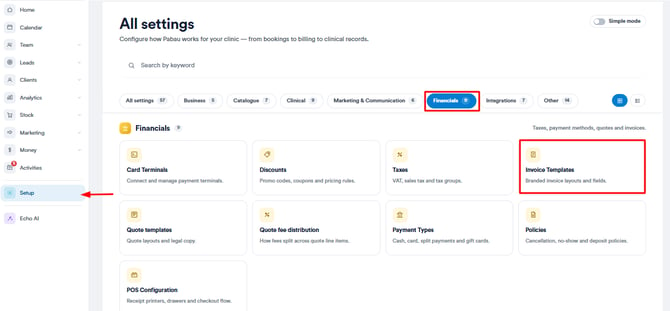
Start by logging into your Pabau account. Navigate to the Setup section in the left sidebar menu, then select "Invoice Templates" under Financials. Alternatively, use the search bar in the top right corner of the Setup section.
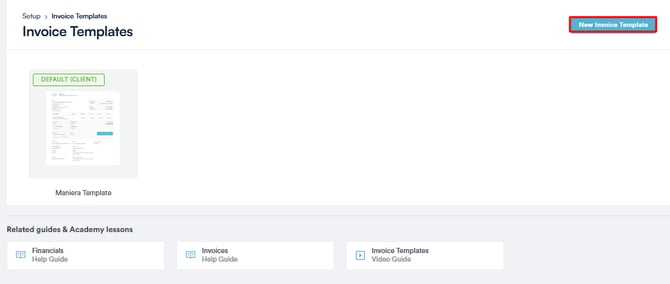
There is at least one default template, but you can create more by clicking on "New Invoice Template" in the top right corner.
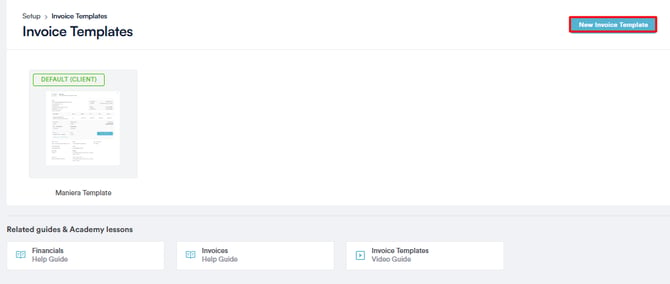
To edit an existing template, click on the one you want to modify. All templates share the same components, whether you're creating a new one or editing an existing template.
Template Overview: In the center of the screen, you'll see a preview of the invoice. Any changes you make will be reflected in real-time. The main components are Appearance, Payment Info, and Header.
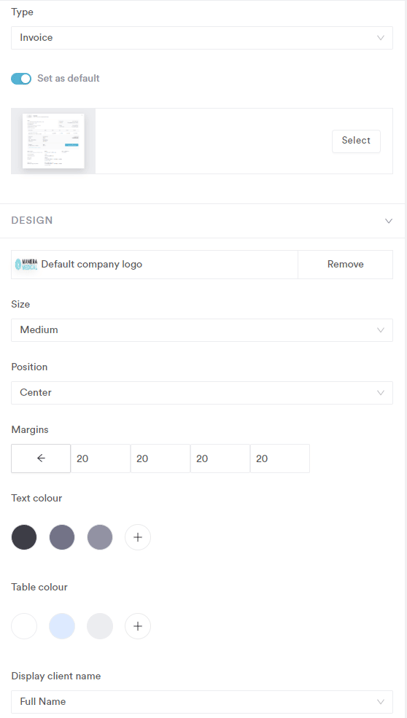
Appearance Tab:
-
- Choose the template type (Invoice, Receipt, or Statement).
- Set the template as default if needed.
- Upload your logo and adjust its size and position.
- Customize margins and text color.
- Choose the format for displaying client names.
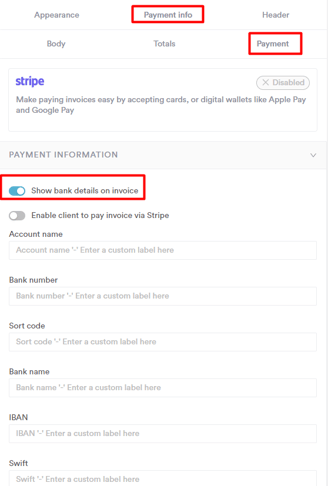
Payment Info Tab: This tab has three parts: Body, Totals, and Payment.
- Body Tab:
- Select fields to be displayed on the invoice.
- Rearrange and rename elements as needed.
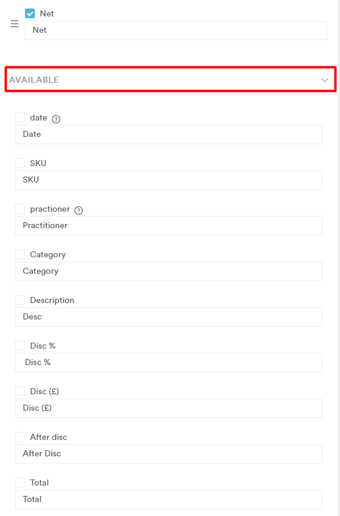
- In the "Available" tab, you can see all of the elements that are not currently displayed on the invoice. To add some of the available elements, tick the box before the element you want to use.
- Totals Tab:
- Choose which elements related to the amount paid will be displayed.
- Payment Tab:
- Decide whether to display bank details or add a button for online payments via Stripe.
- Fill out bank details if displayed.
Header Tab:
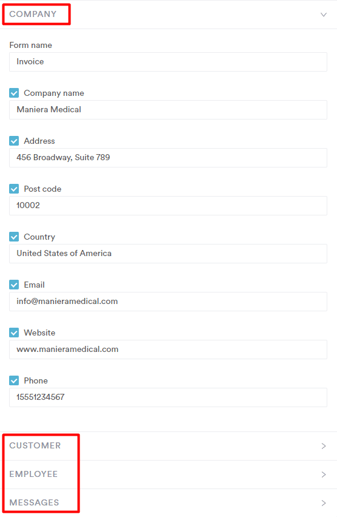
- Company: Set a name for the invoice and add your business name, address, and contact information.
- Customer: Choose client-related information to display, such as the payment method used, appointment date, authorization code, or customer ID.
- Employee: Decide whether to display the name of the employee who raised the invoice.
- Messages: Add additional messages to display at the bottom of the invoice.
Step 3: Save Changes
To save the changes made to the invoice template, click on the "Save" button in the top right corner.
By following these steps, you can create or customize invoice templates to suit your business needs and maintain a professional appearance when interacting with clients.
How to Include Payment Links in Invoices
Step 1: Navigate to Invoices
Start by logging into your Pabau account. Once you're in, click on Setup in the left sidebar menu, then click on Financials and choose Invoice Templates.
Step 2: Create Invoice Template
Once in the Invoice templates, you can preview previously created ones. To create a new invoice template, go to the top right corner and click on the "New Invoice Template" button. From here, you can name the template, choose its appearance, and customize it to your preference.
Step 3: Include Payment Links
To include the payment link in an invoice template, navigate to the "Payment Info" section and select "Payment." Under "Payment," you'll see three toggles. Make sure to enable the second one, "Enable client to pay invoice via Stripe."
Click on "Save" to update the changes.
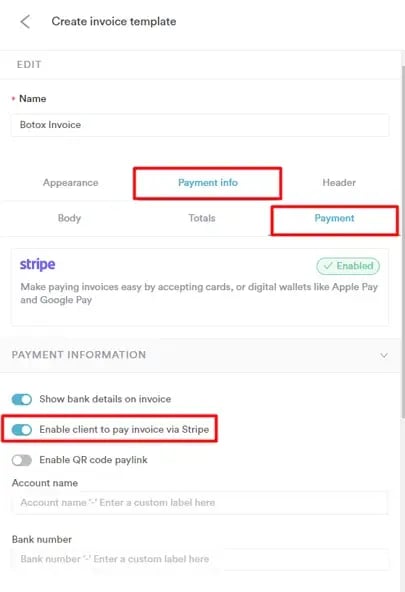
Enabling this toggle will display a "Pay with Card" button in the bottom right corner of the invoice.
Step 4: Send Invoice to Client
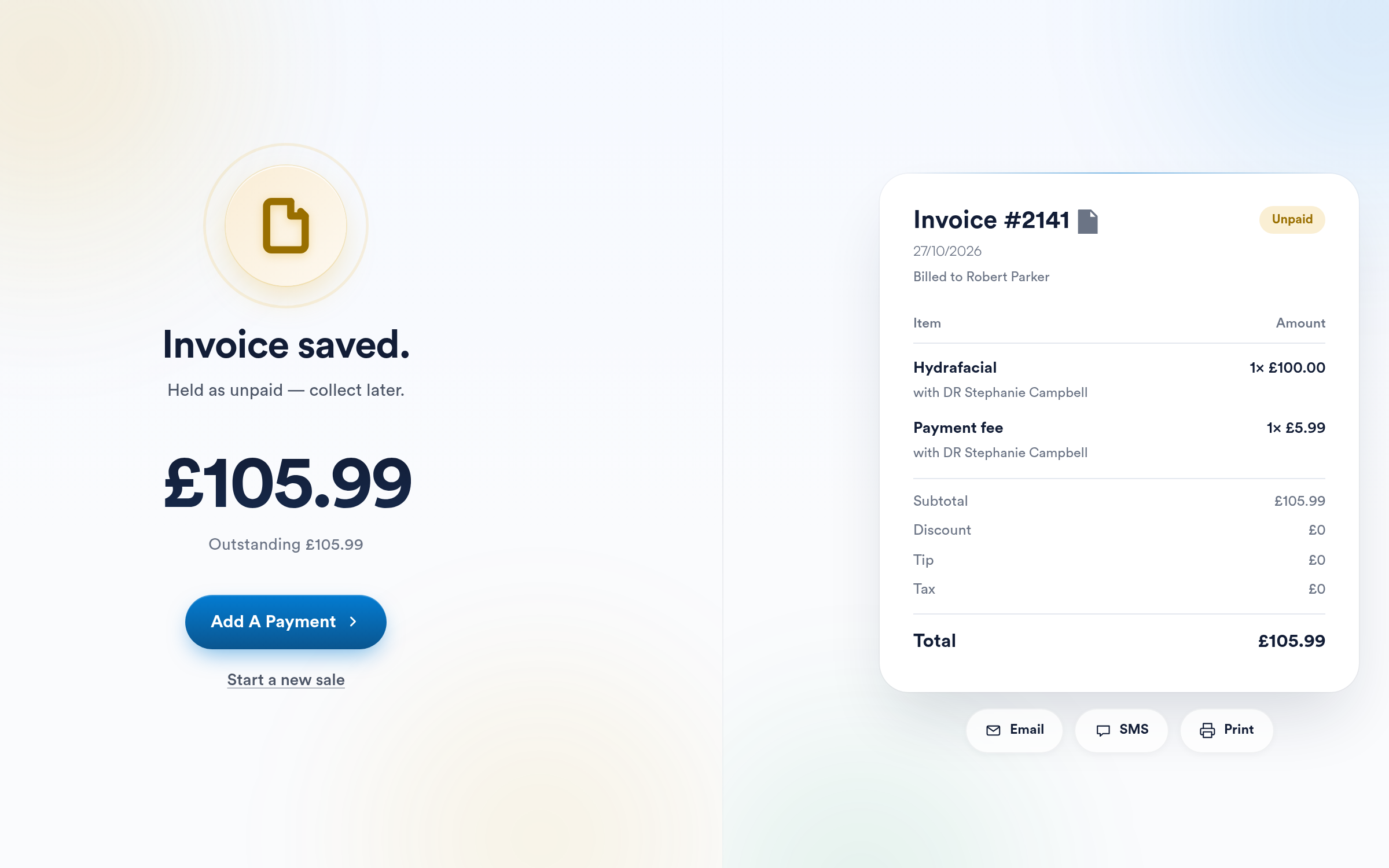
To send the invoice to the client, when proceeding to checkout, save the invoice as unpaid or partly paid, and then click Email on the Invoice saved screen.
Your client will receive an email with a button that opens a secure page where they can pay the invoice. They do not need to sign in. The page shows the amount due and the invoice details.
NOTE: Pabau requires integration with Stripe for payment processing.
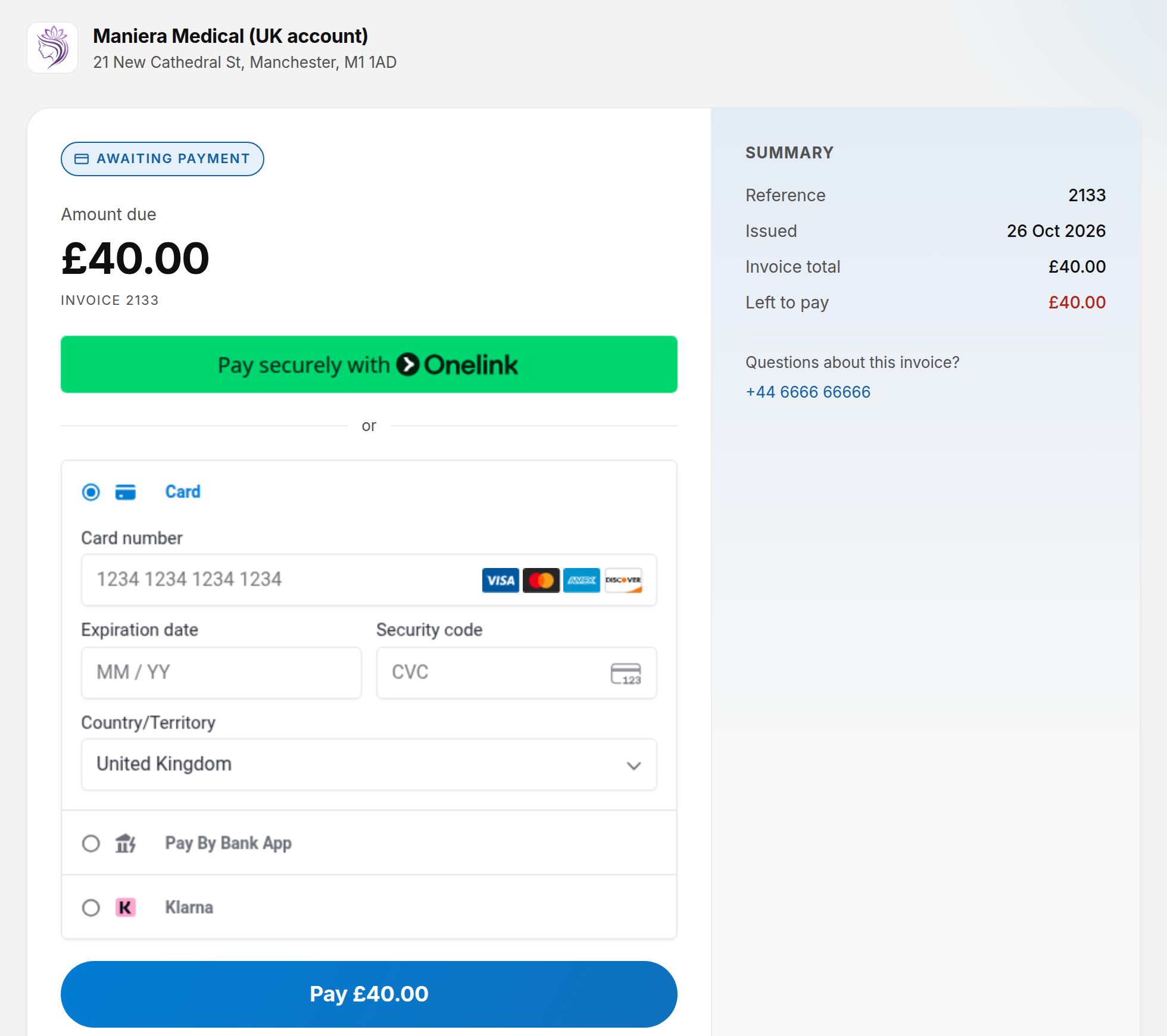
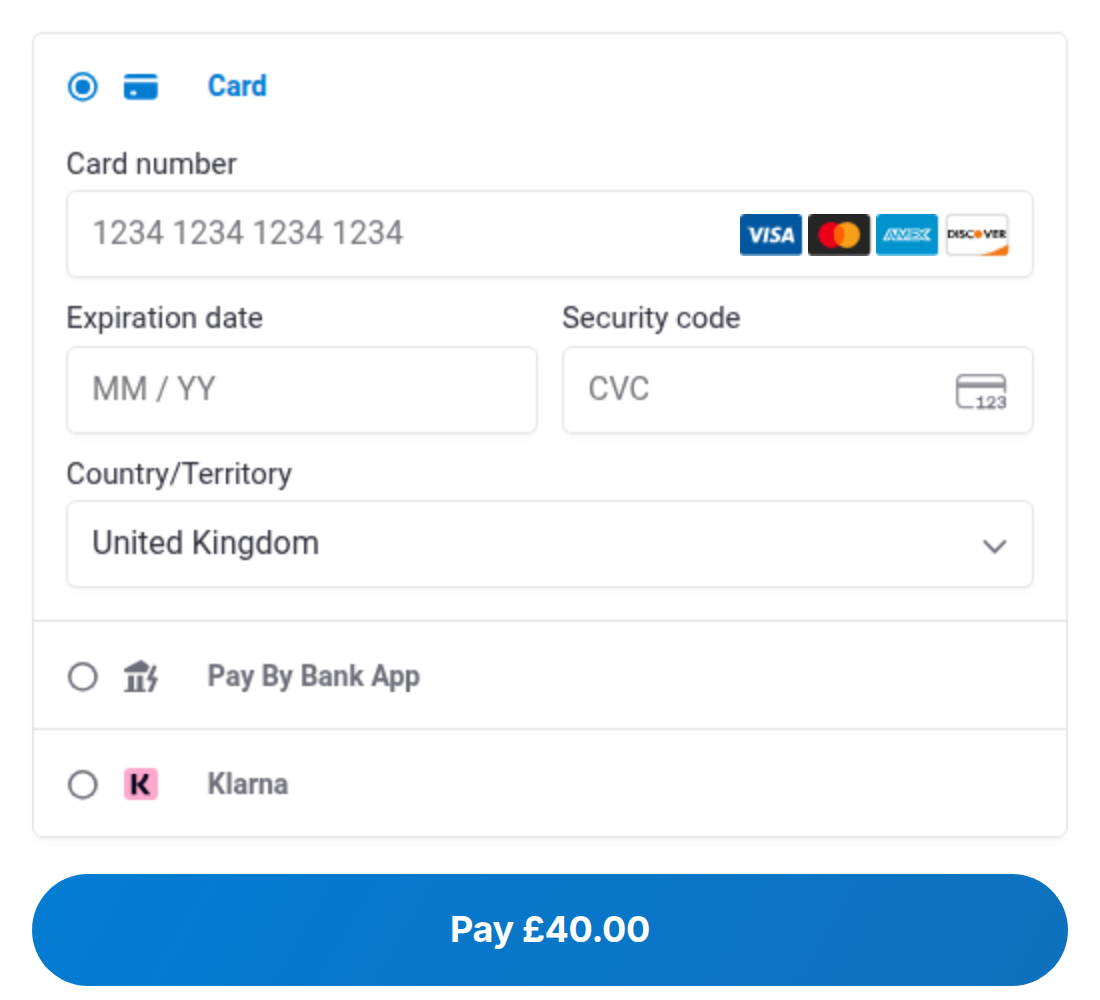
If your deposit policy allows part payments of invoices, they choose Full balance or Another amount under How much would you like to pay?. They then enter their card details, or choose a card they have saved, and click the Pay button, which shows the amount they are paying. Clients can also pay from the Payments page of their client portal — see How to Use Your Client Portal (New Client Portal).
If you prefer not to use your real card for testing, you can use the test cards provided by Stripe by following the instructions here.
By following these steps, you can enable or disable the option to include payment links in the invoice, and you can always change it from the Invoice Templates menu.
How to Use QR Codes in Invoices
Step 1: Accessing Invoice Templates
To begin, log into your Pabau account and navigate to the Setup section in the left sidebar menu. From there, select "Invoice Templates" under Financials.
Step 2: Editing the Invoice Template
Once you're in the Invoice Templates section, choose the specific template you want to add a QR code to. Click on the selected template to open the Edit invoice template interface.
Step 3: Enabling QR Code Paylink
Within the Edit invoice template interface, locate the "Payment Info" tab on the left-hand side. Then, navigate to the "Payment" subtab. Here, you'll find the option labeled "Enable QR code paylink." Toggle this option to enable the feature.
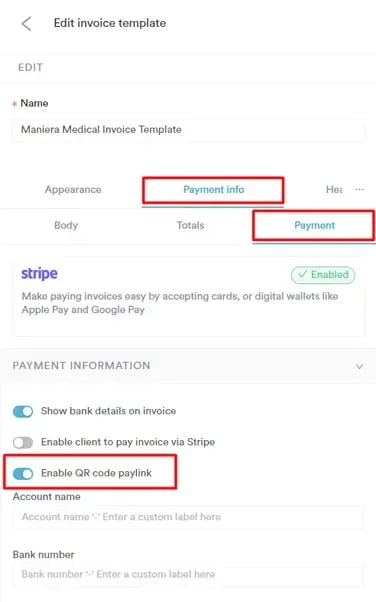
You can preview the changes in the center of the screen before finalizing them.
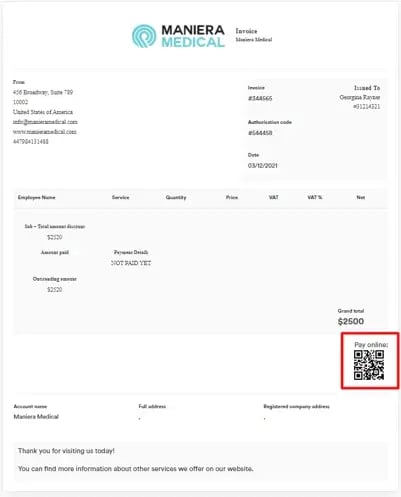
Save your changes by clicking on the "Save" button in the top right corner of the screen.
Step 4: Issuing an Invoice
With the QR code paylink feature enabled, proceed to raise an invoice using the Point of Sale as usual. Make sure to save the invoice as unpaid or part-paid.
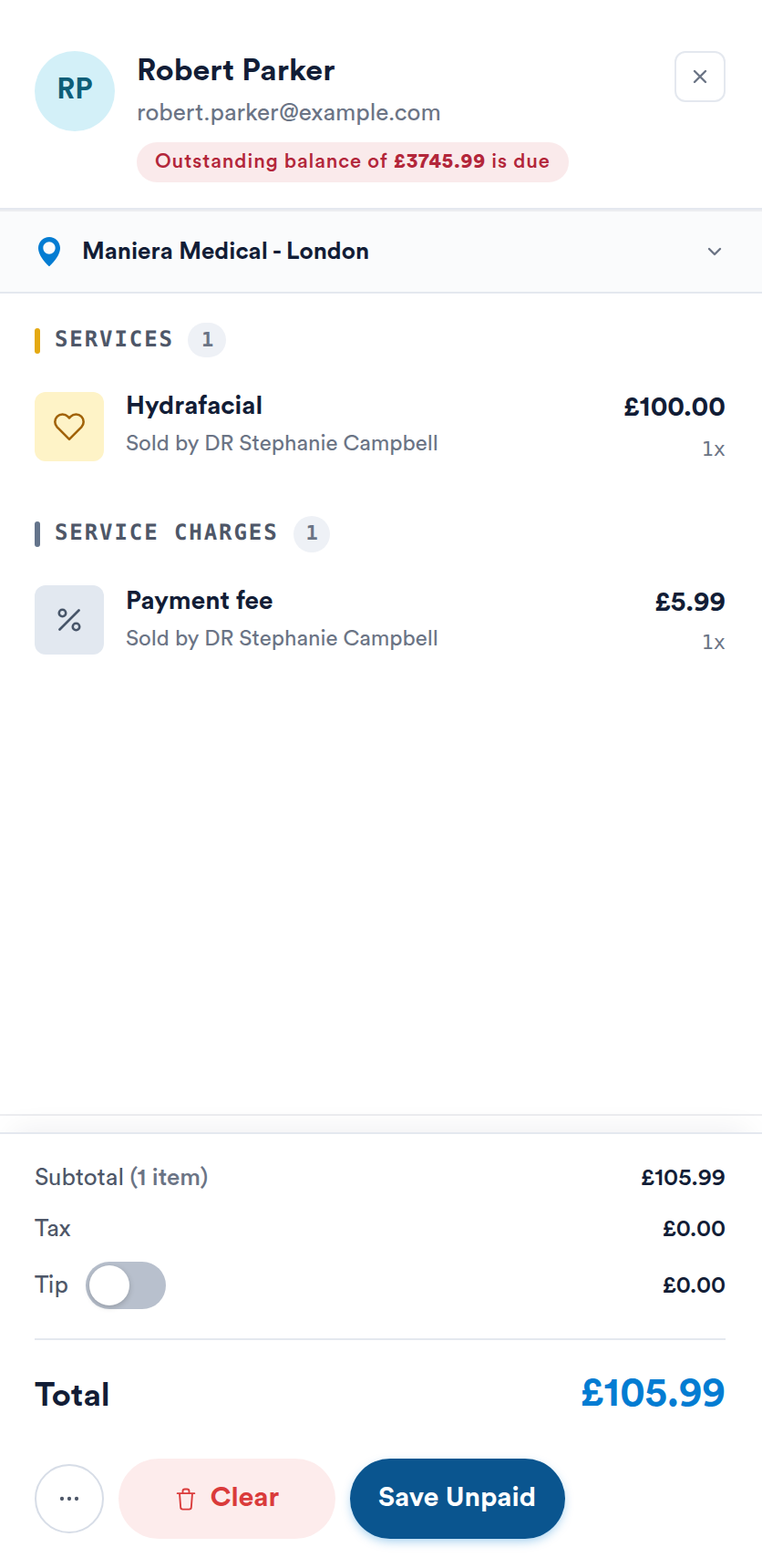
If you prefer not to use your real card for testing, you can use the test cards provided by Stripe by following the instructions here.
Step 5: Sending the Invoice with a QR Code
After you save the invoice, you'll see the Invoice saved screen. Click Email under the invoice to send it to the client.
Step 6: Using the QR Code
The client will receive the invoice by email. The QR code is printed at the bottom of the invoice.
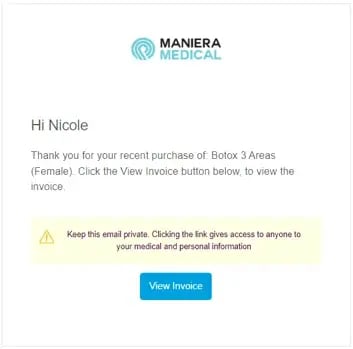
The client can scan it from the invoice, for example on a printed or downloaded copy.
By scanning this QR code, they will be directed to the payment link associated with the invoice, streamlining the payment process.
By following these distinct steps, you can integrate QR code paylinks into your invoices, providing both convenience for your clients and efficiency for your invoicing process.
Was this guide helpful? Let us know by voting below - your feedback helps us write clearer articles.
For more guides, browse the related articles below or use the search bar at the top of the page. You can also watch our video learning series, the Pabau Academy, or visit the Support page for additional help.