
The Prescription Page in Pabau helps you keep track of every individual medication prescribed, across all prescriptions in your clinic. This is especially useful for auditing, reviewing medication history, and ensuring every detail is accurate before sending prescriptions to pharmacies.
NOTE: For detailed information on the Prescription Report, refer to this article.
Step 1: Navigate to the Prescription Page
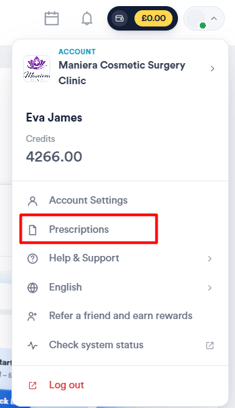
Start by logging into your Pabau account using your login credentials. Then, navigate to your avatar located at the top right corner of the screen and click to open the available options.
The Prescription tab will be displayed.
Step 2: Manage Prescriptions
On the 'Prescription' page, you can find and manage every prescription you have created. Each entry in the list provides key information about the prescriptions you have written.
NOTE: This report is drug-based, not prescription-based. That means each row represents a single medication, even if multiple drugs were prescribed under the same prescription.
You can identify each prescription by its unique Prescription number, which serves as a reference for tracking. The Date column shows when each prescription was originally created.
A key feature of this page is the Status icon. This icon provides an "at-a-glance" validity check, telling you whether a prescription is complete and ready to be sent to a pharmacy.
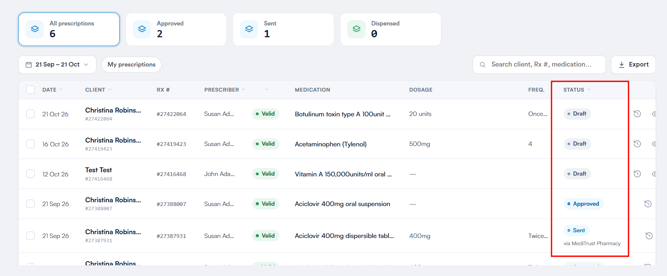
In the prescriptions list, the Status column shows where each prescription is up to:
- Draft: saved but not issued yet
- Approved: signed and ready to issue
- Sent: sent to a pharmacy, with the pharmacy name shown underneath
The tag next to the prescriber shows whether the prescription has passed all checks. Valid means the client’s details, dosage, quantity and required fields are complete and the prescriber is authorised. If anything is missing, hover over the tag to see what needs fixing.
You can also use the tiles at the top to see how many prescriptions are Approved, Sent or Dispensed.
For each entry, the Client column displays the name of the patient who received the prescription.
The specific details about the medication itself are also clearly laid out. You'll see the Medication Name, the prescribed Dosage, and the Quantity of units included in the prescription. Additionally, the Description column contains any important notes or specific instructions that were included for the for pharmacy.
Each drug in a multi-drug prescription is shown in a separate row. Approving one row approves all drugs in that prescription. From this page, prescriptions can be sent to pharmacies by selecting which medications to include.
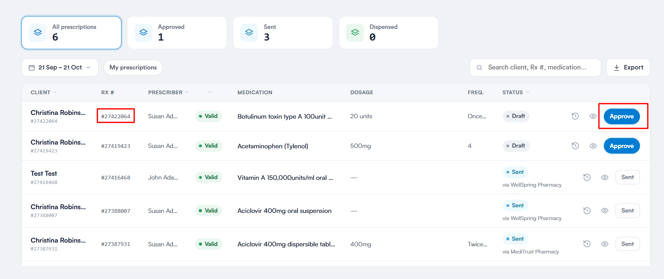
Step 3: Send Prescription to Pharmacy
Before a prescription can be sent to a pharmacy, it must pass a validity check. To initiate this check, first click the 'Approve' button. If the prescription is valid, the 'Send' button will become active, allowing you to click it.
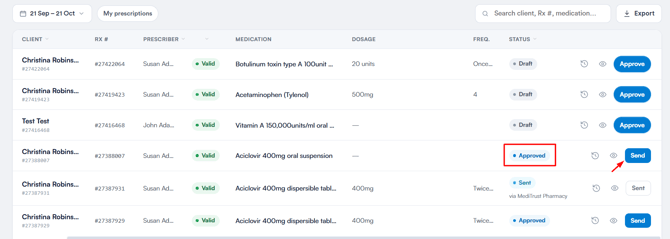
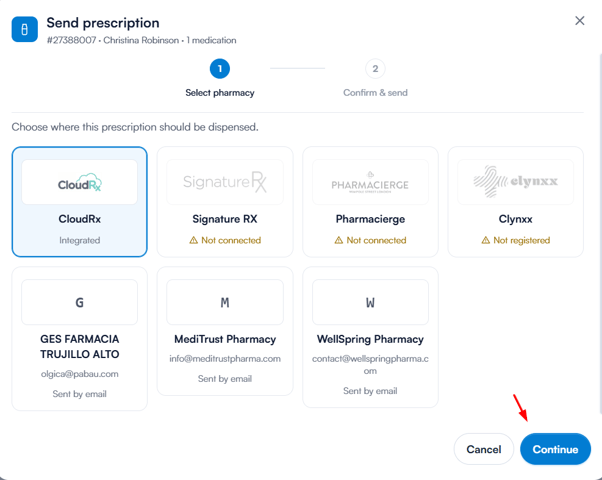
After clicking Send, the Send prescription window opens. Sending takes two steps: Select pharmacy and Confirm & send.
First, choose the pharmacy where the prescription should be dispensed. Each pharmacy shows how it receives prescriptions:
- Integrated: sent directly through the integration, e.g. CloudRx
- Sent by email: sent to the pharmacy’s email address
- Not connected or Not registered: not set up yet, so you can’t send to it
Select the pharmacy and click Continue to move on to Confirm & send.
In the Confirm & send step, check the details before sending:
- Medications: tick the medications you want to send
- Note for pharmacy: add anything the pharmacist should know (optional)
- Paid by: choose whether the Client or the Clinic pays
- Delivery: choose a delivery option
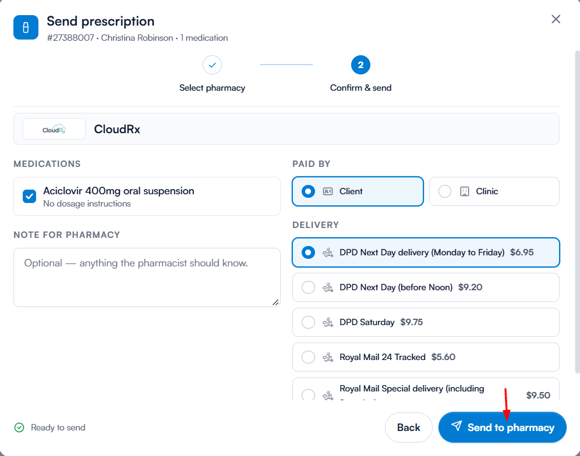
When you see Ready to send at the bottom, click Send to pharmacy. To change the pharmacy, click Back.
By following these steps, you can confidently prepare, approve, and send prescriptions directly to pharmacies through the Centralized Prescriptions feature in Pabau.
Was this guide helpful? Let us know by voting below - your feedback helps us write clearer articles.
For more guides, browse the related articles below or use the search bar at the top of the page. You can also watch our video learning series, the Pabau Academy, or visit the Support page for additional help.