
Clients can pay money into their account in advance, for example as a prepayment for their next visit, and use the balance later to pay for treatments and products. You add the money in the Point of Sale and take payment for it like any other sale.
Step 1: Open the Point of Sale for the Client
Click Create → Sale (or press Shift + S) and choose the client under Who is this sale for?.
NOTE: Money on account always belongs to a client, so Account isn’t available for a walk-in sale.
Step 2: Open Account
- Click Account in the rail on the left. The Add funds to account panel shows the client's Current balance.
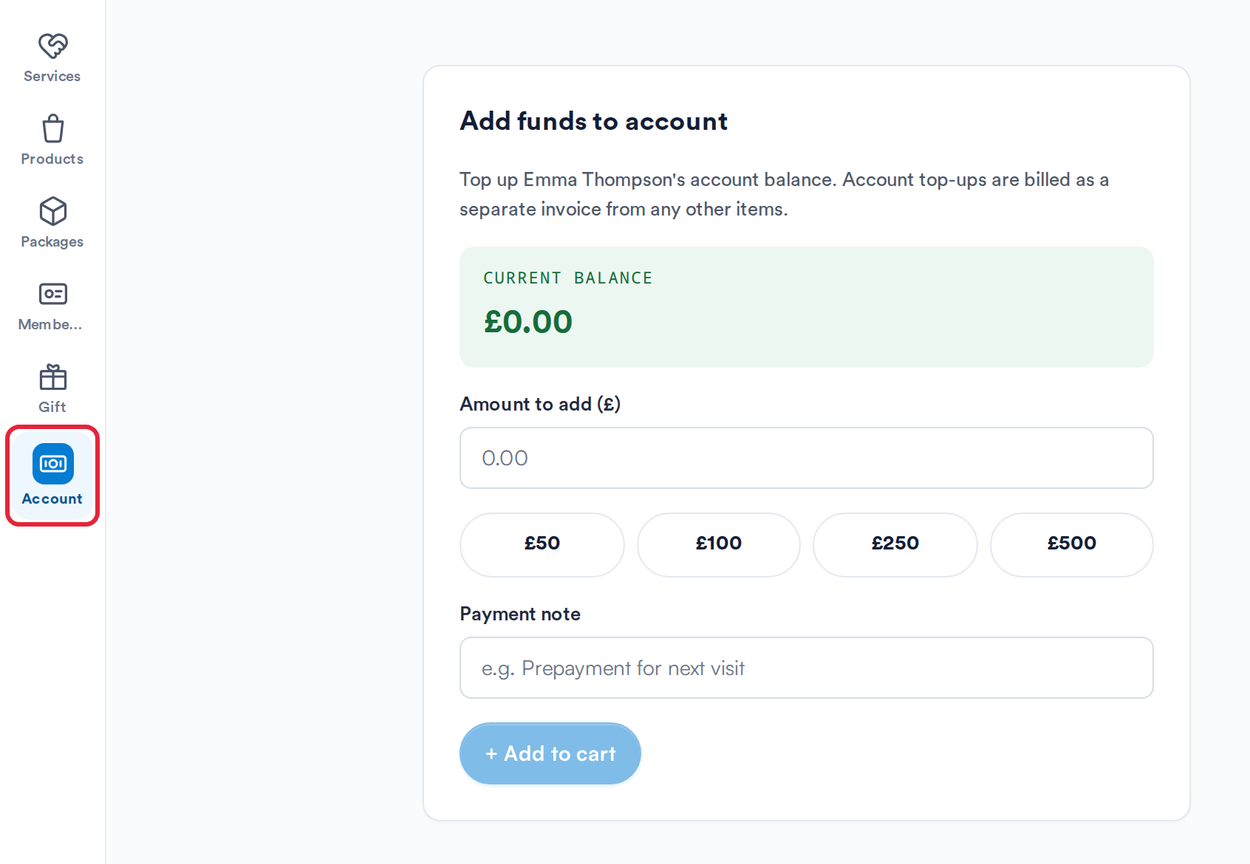
Account shows the client’s current balance
Step 3: Enter the Amount
- Click one of the preset amounts (£50, £100, £250 or £500), or type any amount in Amount to add.
- Optionally, add a Payment note, for example Prepayment for next visit.
- Click + Add to cart.
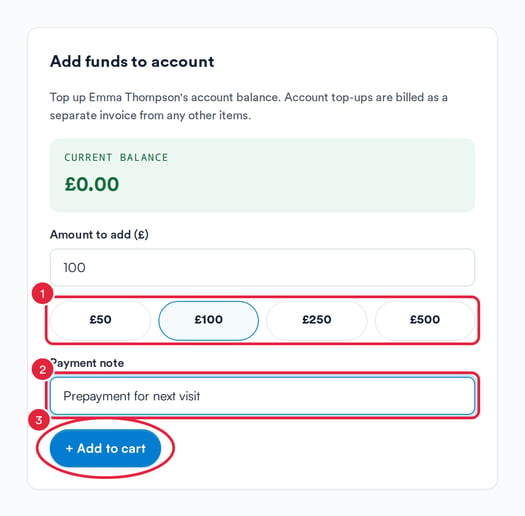
Pick or type the amount, add a note, then add it to the cart
Step 4: Continue to Payment
The panel changes to Top-up added to cart and shows the balance now and After top-up. The top-up appears in the cart as Add funds.
- Click Continue to payment. To take the top-up out of the cart instead, click Remove.
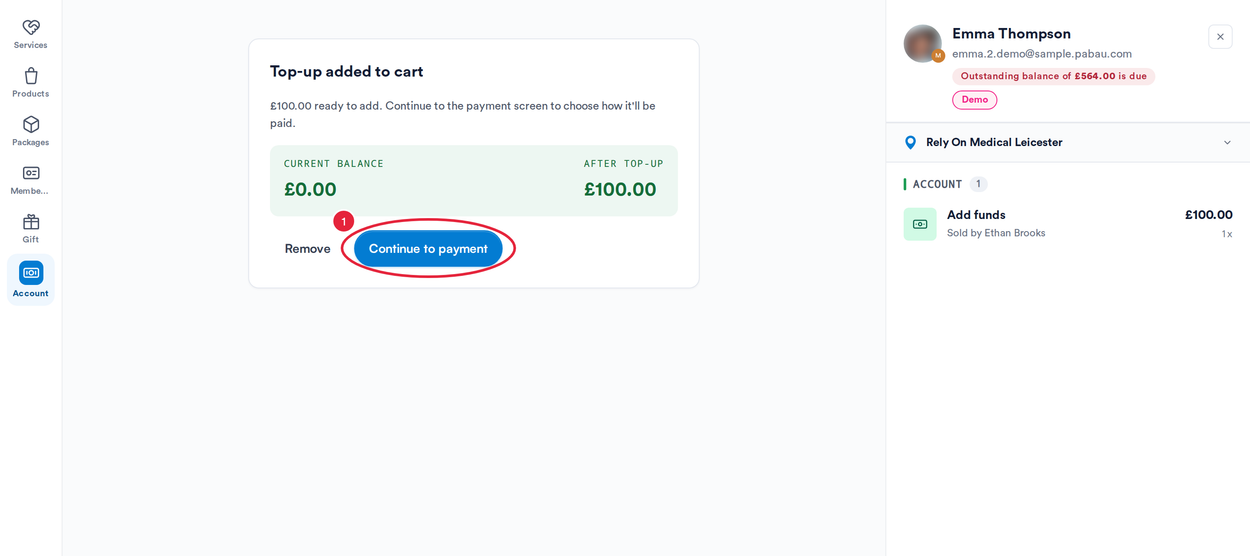
Check the new balance, then continue to payment
Step 5: Take Payment
Choose the payment method, click Collect or Charge depending on the method, then click Confirm Payment. You can split the payment between methods, as for any sale.
IMPORTANT: The money is only added to the client’s balance once the top-up is paid. A top-up left unpaid can be paid later by the client from a payment link (see Where Can I Find an Unpaid Top-up? below).
Once the payment is confirmed, the money is added to the client's account balance, ready to use on a future sale. To spend it, see How to Use Prepaid Payment Methods at the Point of Sale.
If the Cart Already Has Items
A top-up is billed as a separate invoice from anything else, so the cart must be empty first. If it isn't, you'll see Cart must be empty to top up the account:
- Click Back to catalogue to return to the items and finish that sale first.
- Or click Clear cart and top up to empty the cart and go straight to the top-up.
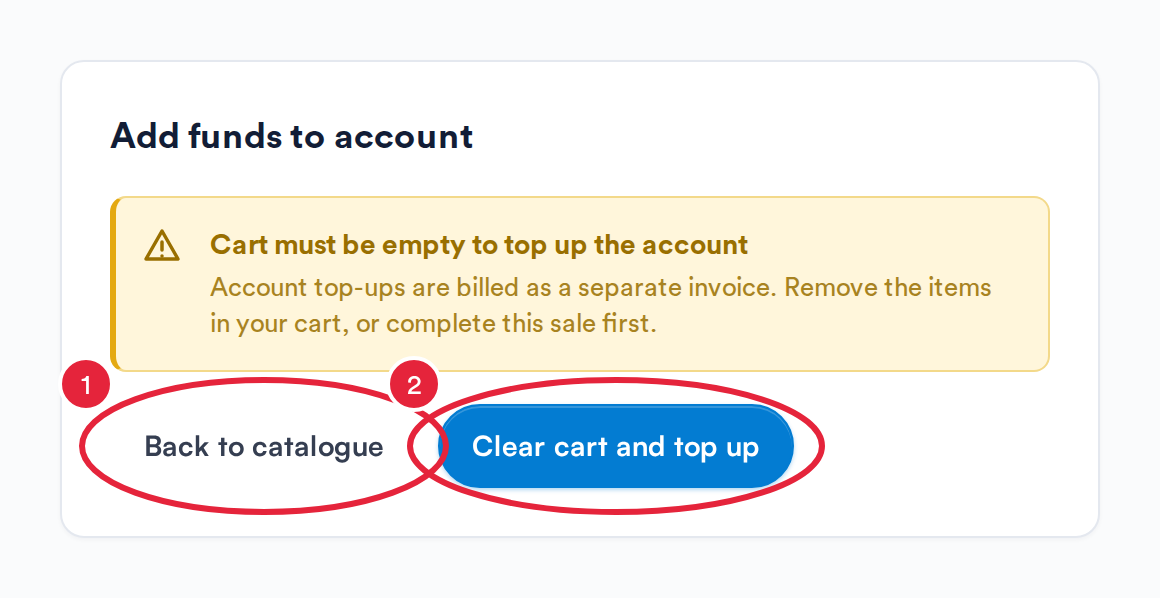
Finish or clear the current sale before adding money to the account
Where Can I Find an Unpaid Top-up?
A top-up that has not been paid yet, for example one you have sent the client a payment link for, is not listed under Money → Invoices or on the client card’s invoice list. Both of those leave account top-ups out, because a top-up is money held for the client rather than a bill for a treatment or product.
To find it, go to Money → Payment Links. Top-up invoices are listed there with your other invoices and have invoice numbers starting with ACC. To see only the ones still waiting for payment, change the filter at the top left from Paylinks to Paylinks (Overdue). Click a row to open the invoice.
NOTE: The money is only added to the client’s account balance once the top-up is paid. You need the Can access paylinks page permission to see the Payment Links tab.
Does a Top-up Count as Revenue in Reports?
Not when it is paid in. Money added to an account is held for the client until they spend it, so the summary reports treat a top-up as a balance you owe the client, and count the revenue when that balance is spent on a treatment or product.
- Business Snapshot — Gross Sales leaves account top-ups out. The ACCOUNT section shows them instead: Account collections (money paid onto client accounts in the period), Account redemptions (payments made from account balances) and Account outstanding balance (what clients still hold on account at the end of the period).
- Accountant Summary — top-ups appear under Liability as Top-ups (Deposits Received), not under Sales.
When the client later uses the balance, the item they buy is invoiced and counted as a sale like any other.
NOTE: Reports that list every invoice line, rather than totals, still show a paid top-up as its own line. Filter it out if you only want treatment and product sales.
What's next?
- How to Use Prepaid Payment Methods at the Point of Sale
- How to Allocate Money from Account Towards an Invoice
- How to Perform a Sale
Was this guide helpful? Let us know by voting below - your feedback helps us write clearer articles.
For more guides, browse the related articles below or use the search bar at the top of the page. You can also watch our video learning series, the Pabau Academy, or visit the Support page for additional help.