
You've set up the essentials (Part 1), added the client's policy (Part 2), and charged the visit to their insurer (Part 3). This final part turns that invoice into an electronic claim - validated before it leaves Pabau, submitted through Healthcode, and tracked to payment.
NOTE: This guide is for practices in the United Kingdom. Claims are submitted electronically through the Healthcode clearing service, with additional tools for BUPA membership checks and insurer remittances.
1. Open the claim
Go to Money → Claims. The dashboard shows every insurer invoice with live counts by status:
- Pending - raised but not yet sent to Healthcode.
- Submitted -sent to Healthcode; the row's HC line tracks the clearing-service status (received, validated, sent to the insurer, received by the insurer).
- Processing - a remittance for this claim has been started but not finished.
- Paid - settled in full (partially paid claims are counted here too).
- Needs action - rejected or awaiting a correction from you.
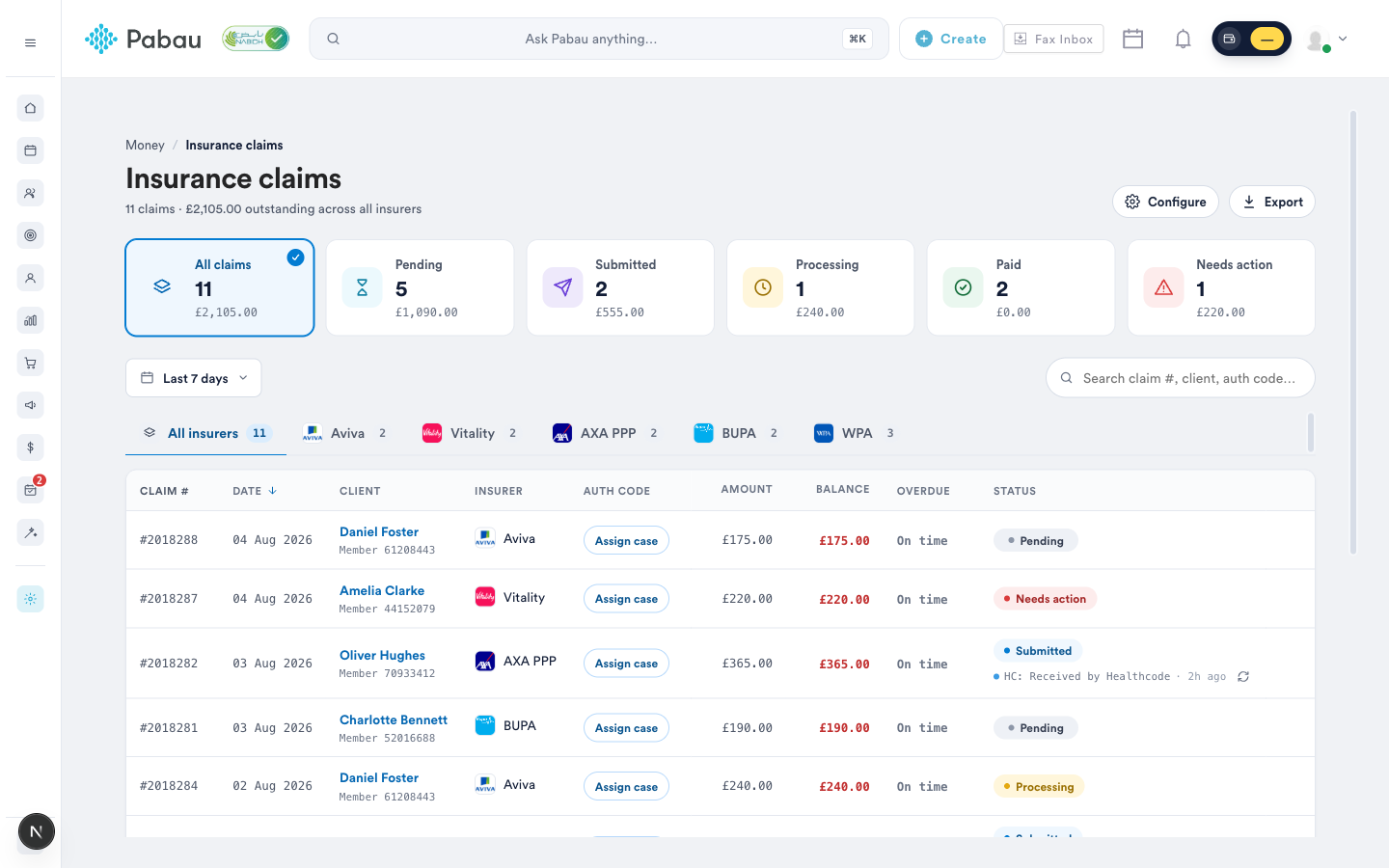
Use the period picker, the search box (claim number, client, auth code) and the per-insurer tabs to narrow the list, and click Open (or Fix on a rejected claim) to enter the claim workspace. Export downloads the current view as a CSV.
2. Review the claim
The Submit Claim screen assembles everything Healthcode needs. The header cards show the policy member ID, payer, method and amounts - for BUPA members, the Lookup pill on the member-ID card verifies the policy on the spot (guide).
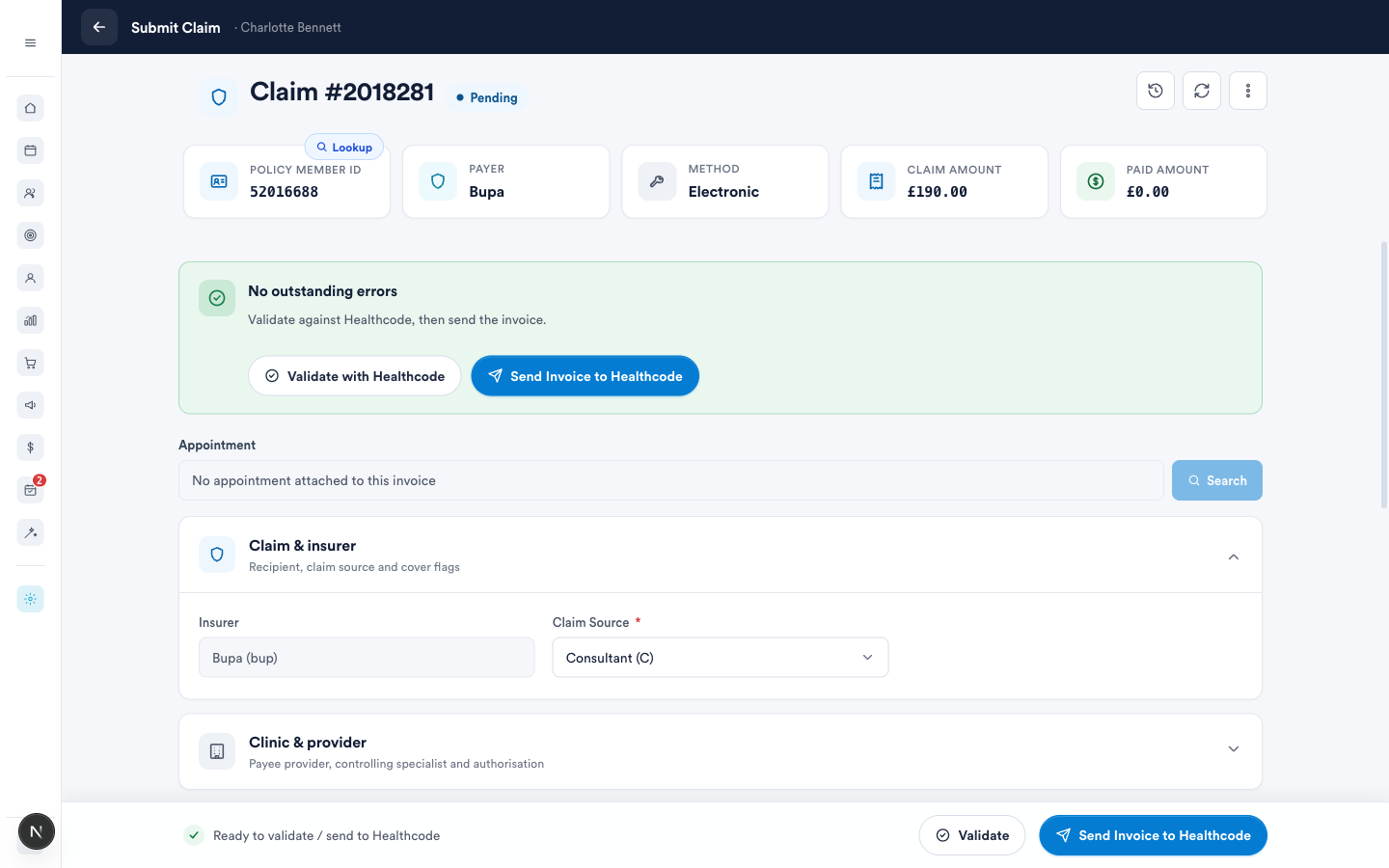
The claim is organised into sections - most fields arrive pre-filled from your defaults, the client card and the invoice; anything missing or invalid is flagged in red:
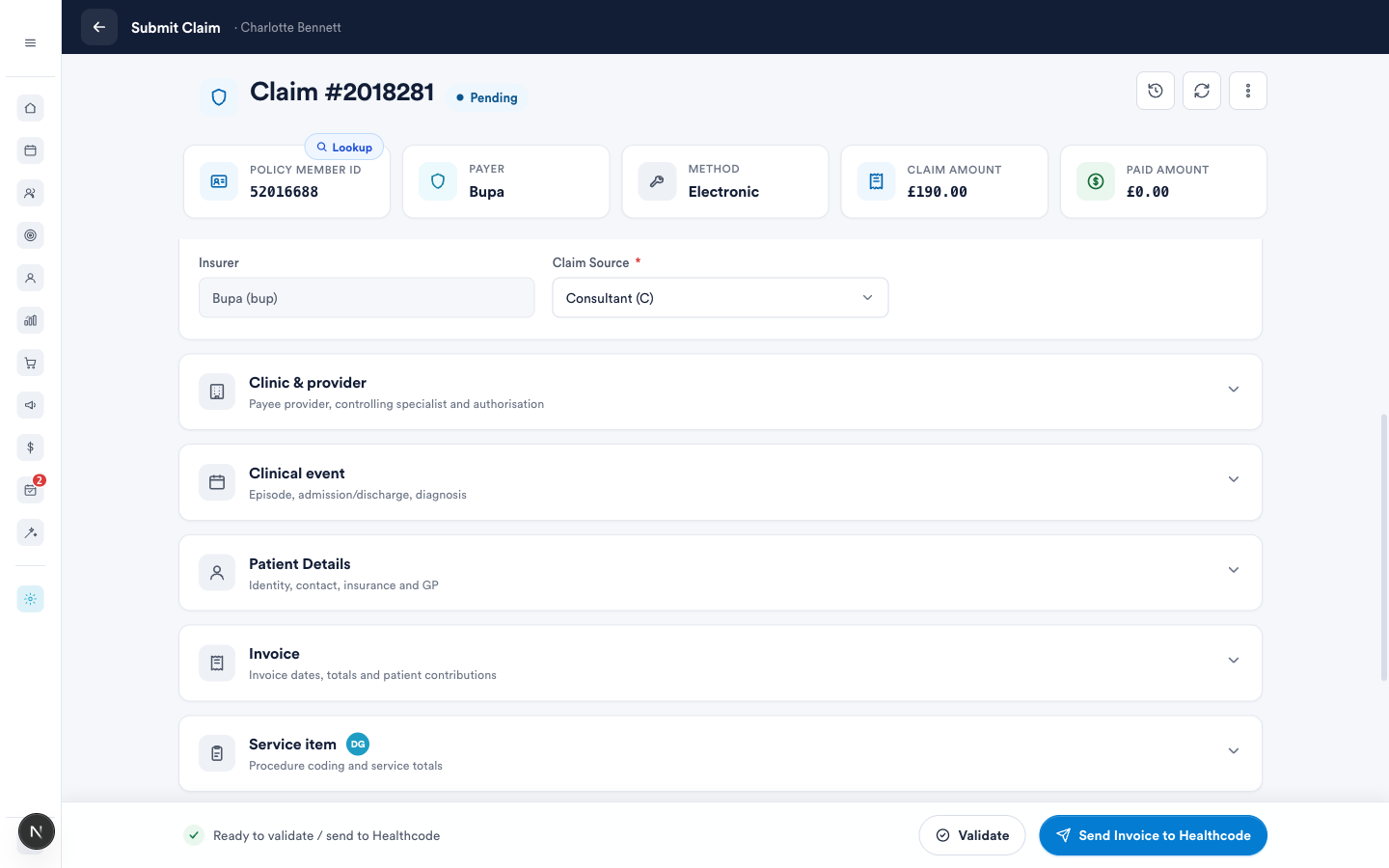
3. Add the diagnosis code
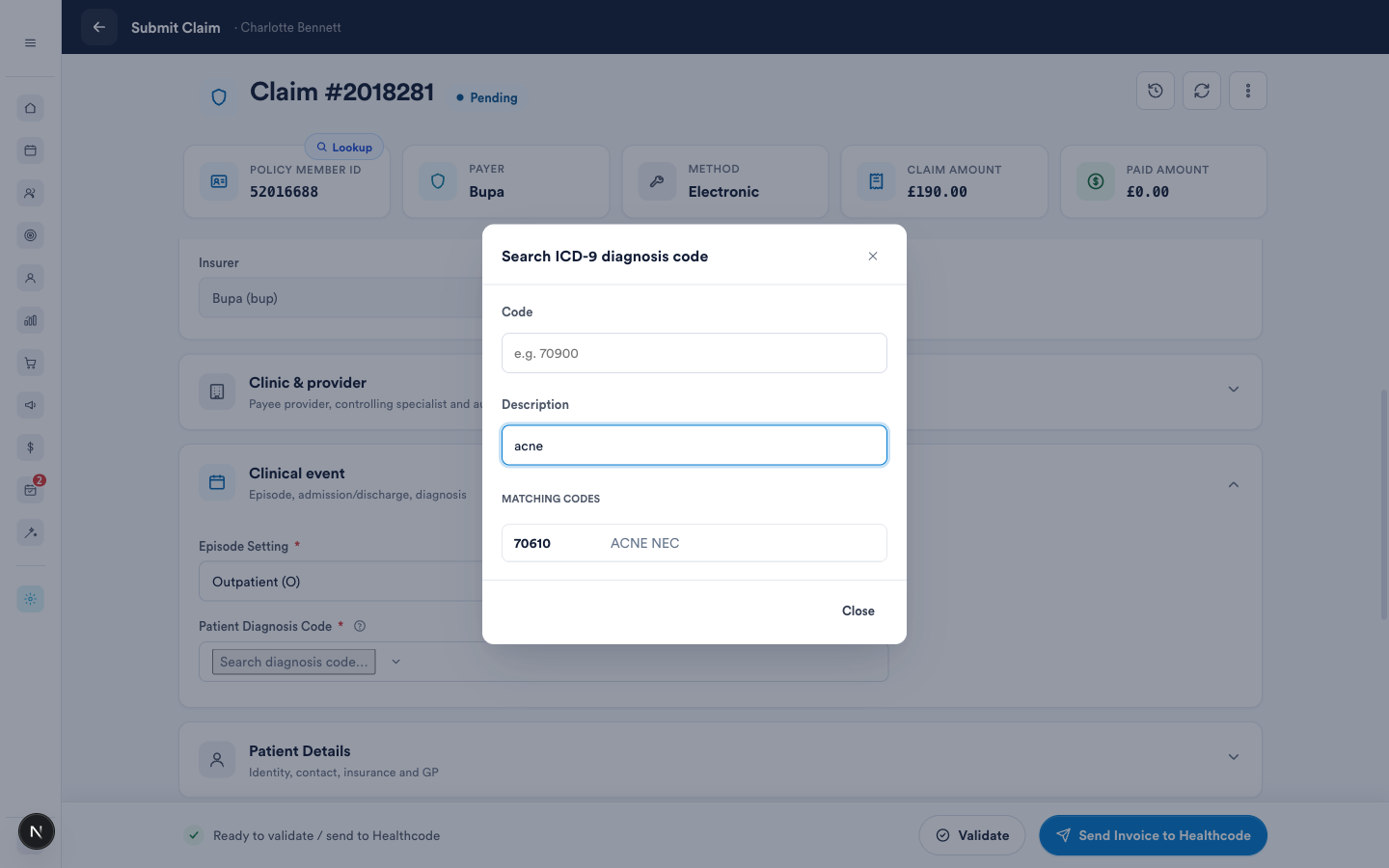
In Clinical event, most insurers require the patient's diagnosis as an ICD-9 code. Click the diagnosis field and search the built-in code book by code or description:
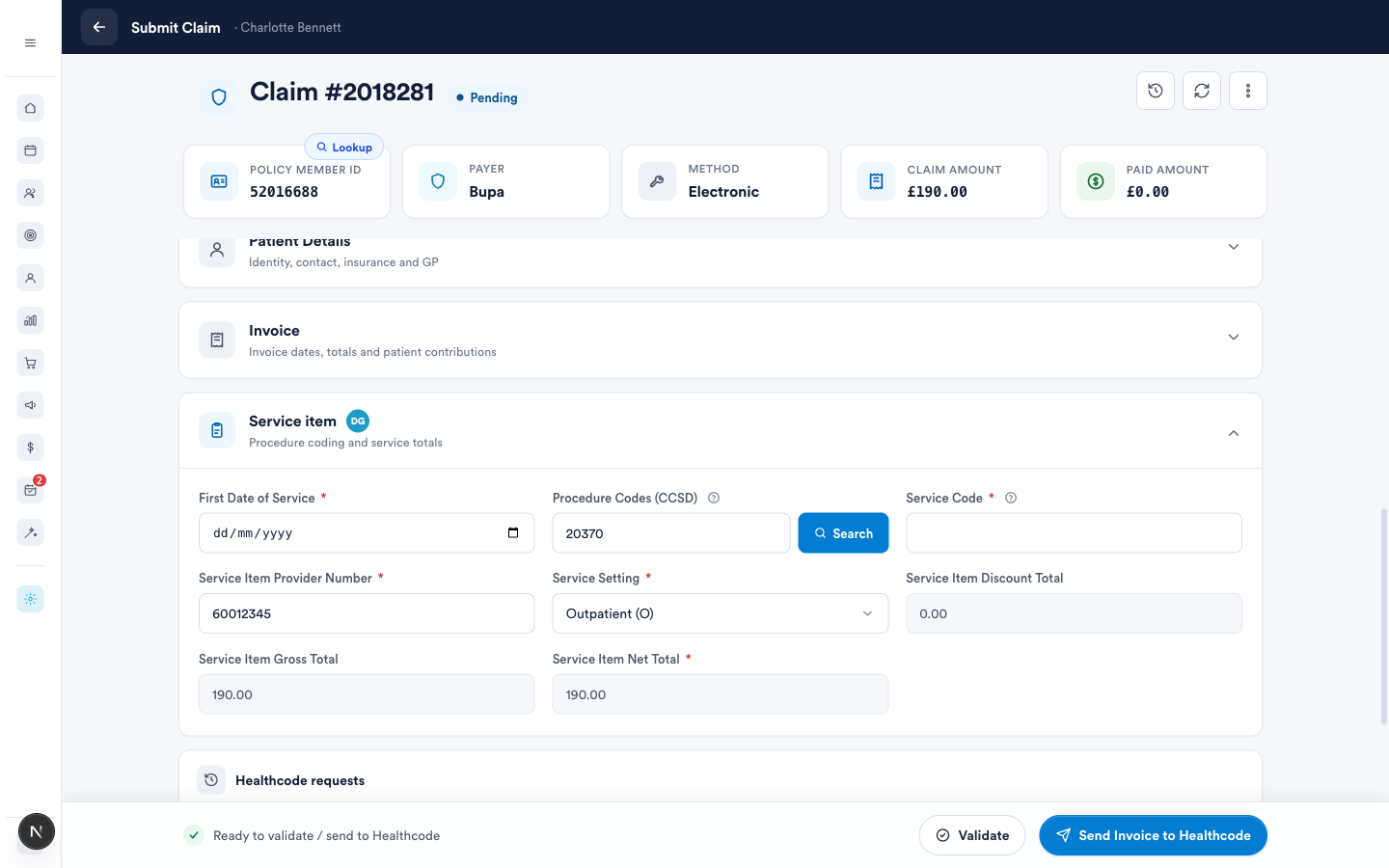
4. Check the service items
Each invoice line becomes a service item carrying its CCSD procedure code, the insurer-specific service code, the ISC code and the line totals. These come from the billing codes on your services (Part 1, step 9) but can be adjusted per claim:
5. Validate, then send
Click Validate to check the claim against Healthcode without submitting - fix anything it flags. When the footer reads Ready to validate / send to Healthcode, click Send Invoice to Healthcode. The status changes to Submitted and Pabau polls Healthcode for the claim's progress; use the refresh icon on the dashboard row to sync on demand.
6. Fix rejections
If Healthcode or the insurer rejects the claim it lands in Needs action with the reason attached. Common ones:
- No matching membership details - the patient's details don't match the insurer's records (for example "Susie" vs "Susan", an old address, or a mistyped membership number). Check with the insurer, correct the client card, and resubmit. For BUPA members, run a membership lookup first.
- Invalid username / password or Access denied - your Healthcode credentials or subscription need attention; re-check them in the Claims setup or contact Healthcode.
- The insurer requires an agreed fee for this service - Vitality requires guideline pricing to be set up in your Healthcode account (Accounting → Guideline Pricing).
Healthcode support: 0330 900 4900 or custserv@healthcode.co.uk.
7. Get paid
When the insurer pays, record the remittance and match it to your submitted claims - including any shortfall you need to re-bill to the patient. That's covered in How to record insurer payments with remittances.
The UK insurance guide series
- Part 1: Set up the insurance essentials
- Part 2: Client insurance setup
- Part 3: Connect appointments to insurance
- Part 4: Submit and track claims with Healthcode (this article)
Questions? Reach us any time via the in-app chat — we're happy to help you get your first claims out the door.
Was this guide helpful? Let us know by voting below - your feedback helps us write clearer articles.
For more guides, browse the related articles below or use the search bar at the top of the page. You can also watch our video learning series, the Pabau Academy, or visit the Support page for additional help.