
The Aged Debt report answers one question: who owes the clinic money, and how long has it been outstanding? It lists one line per debtor — a client or an insurer — and spreads their balance across columns based on how old it is, so you can see at a glance what's recent versus what's been overdue for months.
How to find it
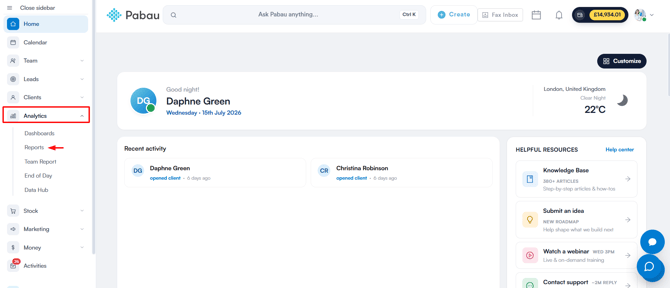
Step 1: Navigate to the Analytics Feature
Log in to your Pabau account, and in the left sidebar menu, go to Analytics, then click on the "Reports" button.
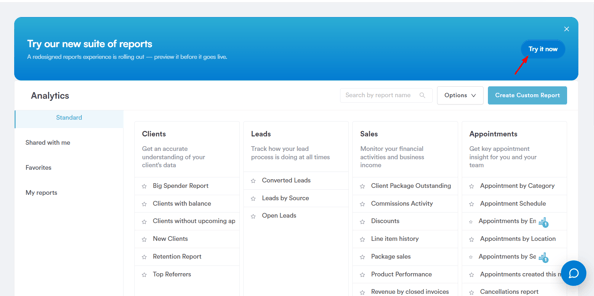
Step 2: Access the reports banner
On the "Try our new suite of reports" banner, click Try it now.
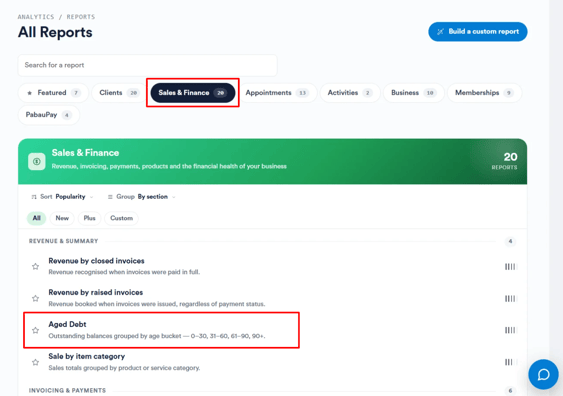
Once you're in the new reports view, go to the Sales & Finance section and click on Aged Debt to open the report.
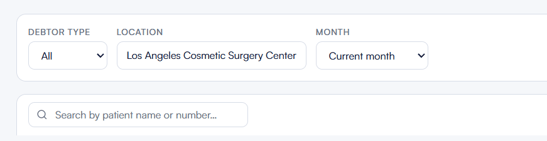
Filters
- Debtor Type – All (default, shows both clients and insurers), Clients only, or Insurance only. Note: when Insurance is selected, clients' money on account isn't shown, since account credit is a client concept, not an insurance one.
- Location – Defaults to your primary location when one is set on your staff profile, and to All locations otherwise. Note: the dropdown only ever lists locations you have permission for, so you can't pick a branch you don't have access to.
- Month – Current month (default, figures as of today) or a past month (figures as they stood at the end of that month).
- Search box – Type a client's name or ID to narrow the report to matching debtors. The search is applied to the report itself, so the footer totals recalculate to cover only the matching rows — a quick way to total up a single debtor.
Understanding the report
Each debtor gets one row, spread across six age columns plus a Total Debt column:
| Column | What it means |
|---|---|
| ≤ 30 days | Most recent — usually current, not yet a concern. |
| 31–60 days | One to two months old — gentle-reminder territory. |
| 61–90 days | Two to three months old — genuinely overdue, worth chasing. |
| 91–150 days | Three to five months old — seriously overdue. |
| 151–300 days | Five to ten months old — long overdue, often where collections begin. |
| 300+ days | Roughly ten months or older — very old, frequently disputed or written off. |
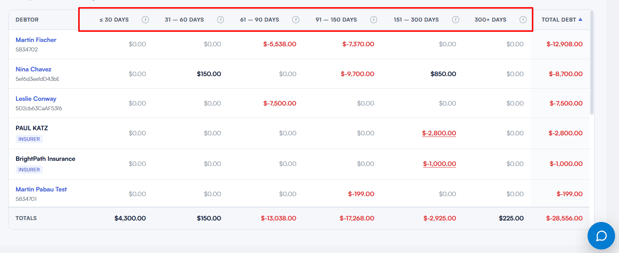
A balance's age is counted from the invoice date (for unpaid invoices) or the payment date (for money on account) — always measured back from the date shown in the "Showing balances as of…" line, not from today.
Tip: Click any column header to sort the report by that column — click it again to switch between ascending and descending.
Red vs black: credit or debt
- Red means the client owes the clinic (genuine debt).
- Black means the clinic owes the client — money on account they've paid in but haven't spent yet.
So a client showing a black number is in credit, even though it's called the "Aged Debt" report — that's expected, not an error.
If a client has both an unpaid invoice and prepaid credit, the two only cancel out when they fall in the same age column. Credit and debt sitting in different columns stay separate, and the final total reflects their true overall position.
Drilling into insurance debt
For insurance debtors, each bucket figure is a link. Clicking it opens the Claims screen in a new tab, pre-filtered to that insurer, to your selected location, and to invoices whose age falls inside the bucket you clicked (based on the same "as of" date) — so the total on the Claims screen reconciles with the figure you clicked in the report. This lets you go straight from "this insurer owes us money that's 61–90 days old" to the individual claims behind that number.
What the Month filter really does
Choosing a past month doesn't just filter — it shows the clinic's position exactly as it stood on the last day of that month. An invoice that was unpaid at the end of March but has since been paid will still show as debt when you view March, because that's what was true at the time. This is what makes the report useful for month-end reconciliation.
NOTE: The "Showing balances as of…" date always caps at today, and each month is its own snapshot in time — so comparing "this month" to "last month" means comparing two different moments, and differences are expected.
Toolbar controls
| Control | What it does |
|---|---|
| Export | Downloads the report as a CSV file — the full snapshot for your current filters, not just the rows loaded on screen — so it can be saved or shared, e.g. emailed to an accountant. |
| Opens a print-friendly version, respecting your current filters. | |
| Help | Opens contextual help for the report. |
| Refresh | Re-runs the report with the latest figures. |
NOTE: The report holds its figures for a couple of minutes for speed rather than recalculating instantly. If you've just taken a payment or edited an invoice and it's not reflected yet, wait a minute or two and then click Refresh.
A worked example
A client viewed as of 24 June 2026:
- One unpaid invoice of £100, dated 12 May → 43 days old → falls in 31–60 days.
- A £25 top-up paid 12 June → 12 days old → falls in ≤30 days.
- £376 of top-ups paid mid-May → falls in 31–60 days.
Netting it out: the ≤30 days column shows £25 credit, and the 31–60 days column shows £376 credit minus the £100 invoice, leaving £276 credit. Overall, this client is £301 in credit — they don't owe anything, since the invoice is fully covered by credit in the same column.
Things to know (common questions)
- Old credit spent recently still looks old. Credit is aged by when it was paid in, not when it's spent. If a client tops up £500 a year ago and spends £200 of it today, that spend comes out of the oldest credit first — leaving £300 still sitting in the 300+ days column. It doesn't create a new "recent" entry.
- Back-dated top-ups land in the column matching their entered date, not the date they were added to the system.
- Credit notes reduce an invoice's outstanding balance once applied — an unapplied/draft credit note won't affect the report yet.
- Refunds reduce a client's money on account, so a lower-than-expected credit balance may be explained by a recent refund.
- Voided invoices are excluded entirely — they're never counted as debt.
- Deleted or walk-in clients without an active client record won't appear (insurance debt is always kept regardless).
- Money on account is held clinic-wide, not per branch — so filtering to a single location may make the credit side look slightly off. Use All locations for fully accurate credit figures.
By following these steps, you can use the Aged Debt report to see exactly who owes the clinic money, how old that debt is, and where credit is sitting.
Was this guide helpful? Let us know by voting below - your feedback helps us write clearer articles.
For more guides, browse the related articles below or use the search bar at the top of the page. You can also watch our video learning series, the Pabau Academy, or visit the Support page for additional help.